

Winter Storm Update for RVA
As of Thursday afternoon, only subtle changes

3pm Thursday, January 22, 2026
For metropolitan Richmond.
To be complete, our colleagues at the National Weather Service in Wakefield have issued a Winter Storm Watch and a Cold Weather Advisory.
What’s changed since the newsletter on Wednesday
There is greater confidence that serious snow will not start until after dark on Saturday. Precipitation may last longer into Sunday evening.
There is also greater confidence in the changeover to ice. Shifting snow forecast from 6-10” to 3-6”.
There are also signs of another significant winter storm impacting Richmond next Saturday (31st), but it is far too early to draw any sweeping conclusions regarding amounts or precipitation type.

Timing and weather expectations
Friday is fine. Just clouds and sun with an afternoon well into the 40s. Some showers are possible, but they likely hold southeast toward Hampton Roads.
Bitter cold air moves during Friday night, setting the stage for the winter storm. Temperatures at daybreak Saturday will be in the mid-teens. A north breeze will make it feel closer to zero by daybreak Saturday.
It still looks like snow waits until after dark Saturday. This does give time for some last minute preparations on Saturday. However, clouds will thicken during Saturday, and the afternoon will be in the low 20s. A chilly north breeze will make it feel like it is in the teens all day.
Snow moves in Saturday night, likely between dusk and midnight. Accumulation will begin immediately, with the best guess of 3-6 inches by dawn Sunday. The temperature will hold nearly steady around 20 overnight, and travel, while perhaps not fully impossible early in the evening, is strongly discouraged after dusk Saturday.
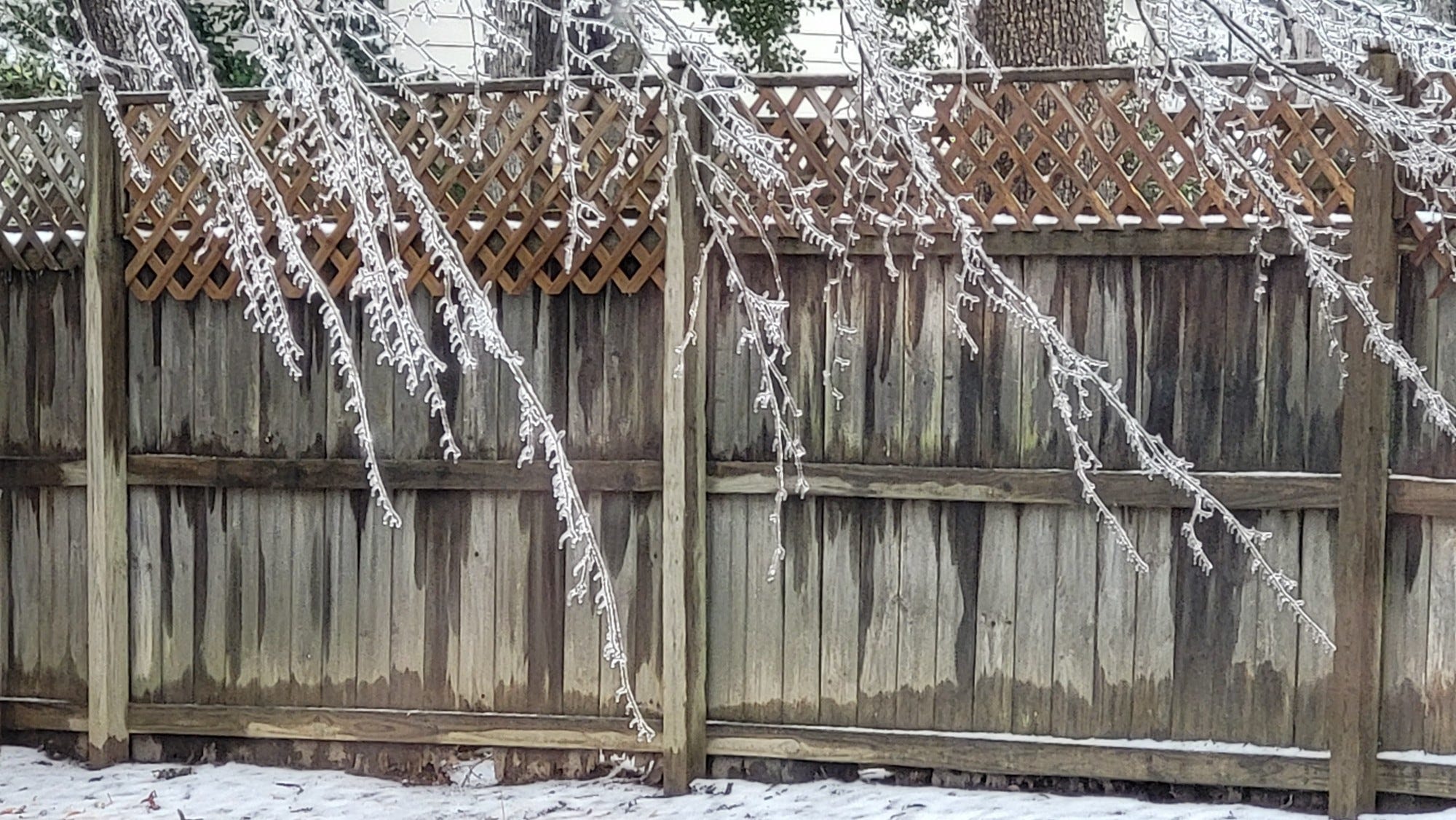
Sunday morning, probably within a few hours either side of dawn, snow will transition to ice — most likely a freezing rain, and it will continue throughout the day. That transition will end any further snow accumulation. The temperature will inch toward the mid-upper 20s by late afternoon. Remember freezing rain is liquid that freezes on contact with surfaces, meaning a heavy glaze will begin to develop during the afternoon on surfaces, including trees and power lines.
As the freezing rain continues, there is great concern that 0.50” to 1.00” (or more) of ice builds up on surfaces by Sunday evening, this will lead to tree damage and power outages as afternoon transitions into evening. After dark, the precipitation will end, but expect there to be an ongoing increase in tree damage and power outages during the night, as the temperature holds in the mid-upper 20s. While difficult to estimate right now, thousands of power outages across metro Richmond are easily plausible as the night goes on.
On Monday, the sun will be out, but the afternoon will only reach the upper 20s to low 30s. Surfaces in direct sunlight will have their ice begin to melt, but this also means that some trees will snap back into their original position, further increasing the risk of power outages. In addition, a northwest wind of 10-15 miles per hour will put additional branches and limbs at risk of falling. Travel Monday morning will be very difficult, but primary roads may be passable by the afternoon, depending on how quickly road crews are able to respond. Secondary and rural roads will probably remain too slick to travel on.
Monday afternoon may be the best chance to clear cars, driveways and sidewalks, as the ice and snow will be a little softer in the afternoon sun.
The worst of the cold will be Monday night. Beneath a clear sky, the temperature will drop into the single digits by dawn Tuesday. Any surfaces that managed to soften into a slush on Monday afternoon will freeze into hardpack ice once the sun goes down Monday evening.
No further rain, snow, or ice is expected through Friday, but afternoons the rest of the week will average the upper 20s to low 30s, with nights averaging in the low-mid teens. The snow and ice will be on the ground for most of the week.
Personally, I do not plan to travel on Sunday or Monday. Perhaps on Tuesday, depending on how things evolve.

Power outages
The number of power outages and the time it will take to restore power will depend on just how bad the ice gets on Sunday. Given the extended cold spell that follows, power restoration may be very slow, especially in the more rural areas away from the city limits and suburban areas. Some of those roads may be cut off due to downed trees, and there is real concern that some areas will be without power and without heat for several days.
Suggestions
Be sure you have enough food and water for 3-5 days. It will be cold enough outside to keep perishable food in shaded areas, but be sure you are able to keep bugs and animals away from it (e.g. a hard-side cooler). Think about reserving some non-drinkable water in a bathtub if it is needed for sanitation.
Charge everything on Saturday night. If you have external batteries for your devices, be sure they are charged up. Have fresh batteries for flashlights.
Be sure you have enough of your critical medications to last all of next week.
Find extra blankets on Saturday. Remember, layers of clothing keep your body warmer than a single coat.
If you have a backup heat source that is non-electric, be sure it is in good working order before the end of Saturday. And if you have a carbon monoxide detector, be sure it is working.
Monday and Tuesday nights will be very cold. If you do not have well-insulated plumbing, let your faucets slowly drip during those nights and keep cabinet doors open to allow milder air to circulate around the pipes. This is especially important for pipes near exterior walls.
What could go wrong
The above scenario is very close to a worst-case scenario. Lower precipitation amounts — distinctly possible — will reduce risk of tree damage and power outages. There is marginal evidence that some drier air works into the system and cuts ice amounts to half of what we have outlined above.
Warm air (i.e. above freezing) about 1-2 miles up in the atmosphere is needed to melt falling snow into a liquid, before it freezes into ice upon contact with the sub-freezing ground. If that warm layer aloft is more shallow, we will have sleet (bounces and pings, but easier to scrape and shovel) rather than the thick glaze that comes with freezing rain — this is where I have some cautious optimism.
There are also minor hints that the snow may take longer to changeover to ice, which yields 5-10 inches of snow, but still around a half inch of ice. But that data is inconsistent with what we’ve seen over the last 48 hours.
I’ll send another update Friday afternoon and provide a briefer update on my website Friday morning.

Enjoy this update and like to support small business? The Wednesday newsletter is free, but you can always buy me a virtual coffee via the button below.
And visit subletteweather.com to see what a weather consultant can do for you or your business.