

Winter is not over
Sunday snow cannot be discounted

4pm Wednesday, February 18, 2026
Milder weather holds through the start of the weekend, but with occasional light rain both Thursday and Friday. Another chilly spell starts next week, but not as cold as a couple of weeks ago.
Clouds, clouds, clouds
There will not be a lot of sun through early Saturday, as a weak system takes shape to our south and slowly edges east.
The result is a couple of cloudy and mild days with sporadic light rain. Although there will be a few sprinkles here or there on Wednesday evening, most of the rain comes in two phases: Thursday afternoon and evening, then again Friday morning. We may get a few hours of sun before dusk on Friday, then it turns around on Saturday with more sunshine.
Total rain through midday Friday will be about a quarter-inch, but a few places will approach a half-inch. Regardless, it will not be as much rain as we had last Sunday.
Temperatures will be above normal through Saturday: generally in the 50s to low 60s during the day and in the 40s during the night, meaning no nights below freezing until at least Sunday night, perhaps even Monday night.
What’s this about snow?

If you have to plan weekend outdoor activities now, Saturday is the safer bet.
After the drying on Saturday, a new storm will form near the Outer Banks on Sunday. Once it does, our winds turn from the northeast, and then north, dragging some colder air toward Richmond, keeping us no better than the 40s during Sunday afternoon.
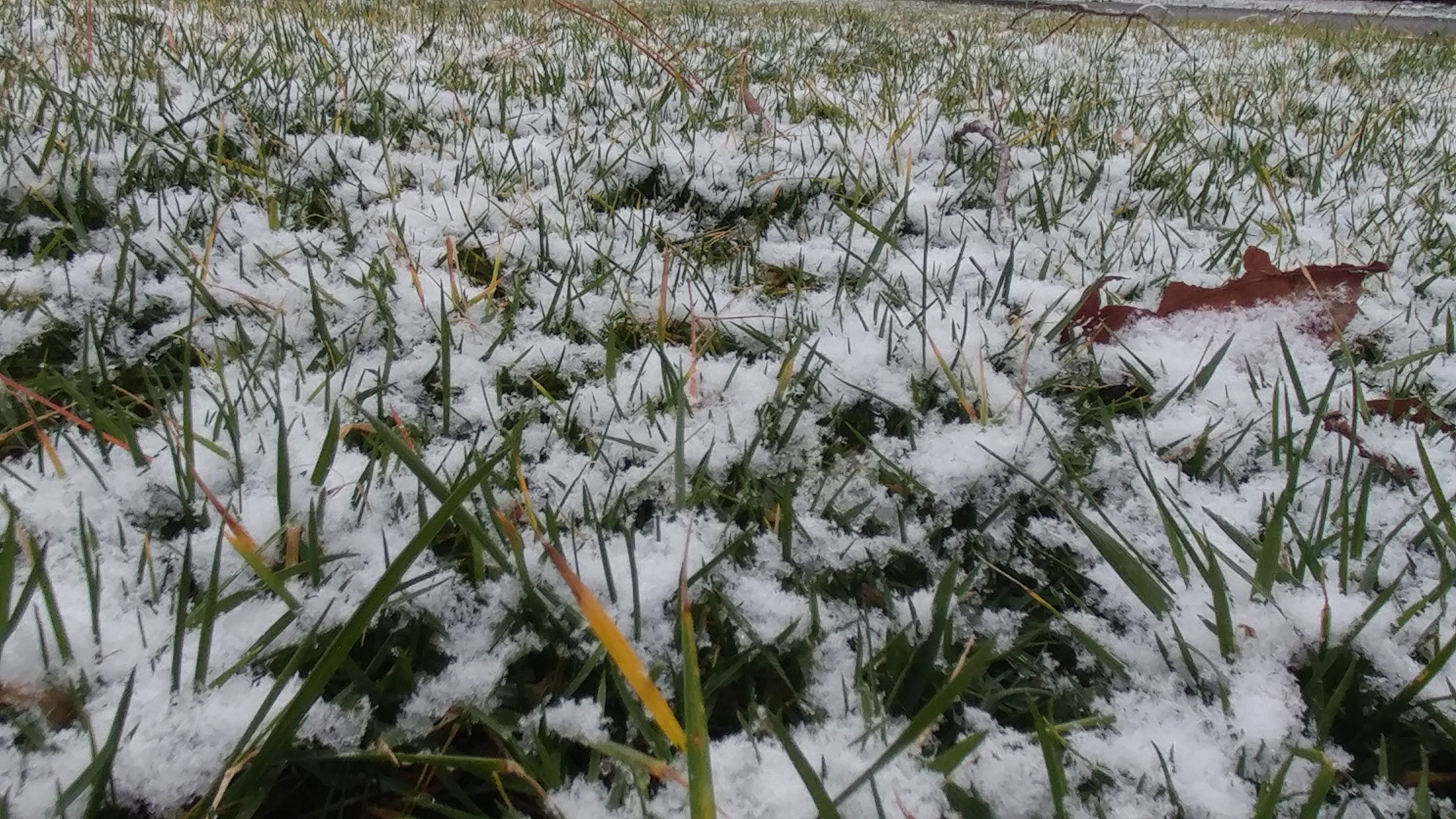
While the core of the storm will track offshore, there is still a question about its precise track — east, or more northeast. This will determine how much precipitation gets tossed west toward Richmond. And there is still a distinct possibility the air gets just cold enough for a few hours of snow on Sunday afternoon or into the night.
Even for now, the worst-case scenario is an inch or two, but at this point, I do not think that accumulating snow is a likely scenario for Sunday afternoon or Sunday night. Nonetheless, it cannot be discounted. On a 10/10 scale of concern, I’d rank it at 3.
Don’t fret about it, but don’t sleep on it either.

Next week
At some point, the colder air will arrive on Sunday evening, either with or without precipitation, so Monday and Tuesday next week will be chilly again. Both afternoons stay in the 40s with clouds and sun, and nights will return to the 20s.
More ups and downs in temperatures for the second half of next week and into the following weekend with a couple of chances for rain. No extended period of especially cold or warm weather through next weekend.
Seasons change
By the way, we have moved into solar spring. This is offset from meteorological (March-May) and astronomical (March 20-June 21) spring by several weeks.
Solar summer is the 3-month period when the sun is highest in the sky at noon (early May through early August). Solar winter is the opposite, when the sun is lowest in the sky from early November through early February.
That means solar spring is early February through early May, which is where we are in the calendar now, and why we are gaining about 2 minutes of daylight each day.

In a little more than a week (February 26), we will get our first sunset at 6pm. Before you know it, we’ll be setting the clocks ahead for Daylight Saving Time (Saturday night, March 7).
Silencing scientists
Since last week, more bad news for American science leadership and the people working to better understand weather and climate to help all Americans be better prepared for environmental disasters.
As we have detailed numerous times, the Office of Management and Budget Director, Russell Vought, is redirecting National Science Foundation money that has funded the National Center of Atmospheric Research (NCAR).
NCAR’s primary facility, known as Mesa Lab, sits along the front range of the Rockies in Boulder, Colorado.
I encourage you to spend six minutes with the NCAR scientists in the video below. Some are young and some are veterans, and they fully understand the impact of losing this invaluable American research center.
Without question, this is a devastating blow to American innovation and leadership in the sciences. Worse, it appears, the fire sale of its assets has already begun.
Disintegration
Last week, the scientists there received a notice that the NCAR offsite supercomputer facility in Cheyenne, Wyoming is being moved to “a third-party operator consistent with the terms of NSF’s cooperative agreement with the University Corporation for Atmospheric Research.”
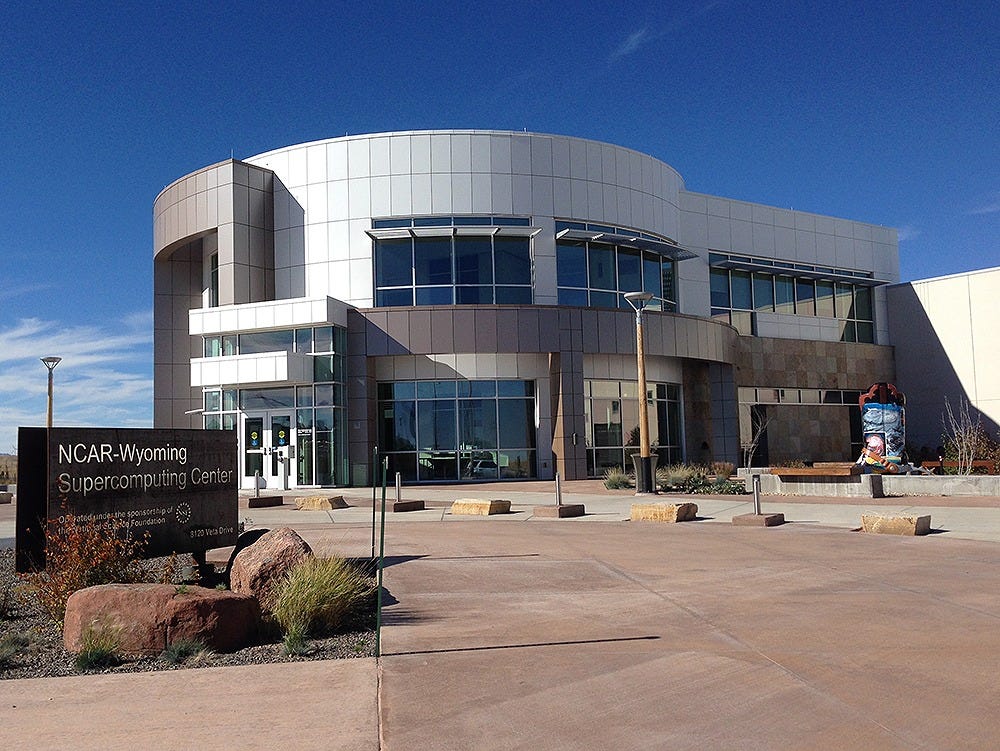
This opaque government announcement raises far more questions than answers, but third-party suggests a private operator, leading to a potential dismantling and sell-off of supercomputer hardware.
One of the supercomputers, Derecho, went operational in 2023 and can perform 19 quadrillion calculations per second, allowing scientists to develop complex simulations of the atmosphere, leading to better understanding of Earth’s weather, and enabling us to better prepare for storms, floods, and the warming climate.

To understand the mind-boggling magnitude of 19 quadrillion (19 followed by 15 zeroes), imagine Virginia, Maryland, North Carolina, and South Carolina all combined together and covered in a dense field of grass. That field would have roughly 19 quadrillion individual blades of grass.
Insurance Premiums
The insurance industry knows this is a bad idea. The American Academy of Actuaries has already commented publicly about the closing, writing a letter to the acting director of the NSF,
“When the scientific foundation for understanding natural hazard risk is weakened, insurers must assume wider loss distributions and higher tail risk, which translates directly into higher premiums for consumers… We strongly encourage the NSF reconsider its plan to dismantle the NCAR, as doing so is very likely to negatively impact the industry, insurance coverages, and outcomes for the American public.”
In effect, losing NCAR increases risk to property and physical assets, both residential and commercial, and will drive up insurance costs.
Endangerment Finding
On a more fundamental level last week, the administration revoked the 2009 EPA statement — based on overwhelming evidence and consensus — that greenhouse gases pose a threat to human health through the impacts of the warming climate. Among those are more heat related illnesses, more spread of disease-carrying insects, and more flooding along America’s coasts and rivers.
Revocation of this endangerment finding is not surprising for those of us deeply involved in American science. This administration has been acting against well-established scientific principles and peddling conspiracy theories since coming into power.
To emphasize, nothing about our scientific understanding has changed. Only the people managing these government organizations have changed.
And they can most tactfully be described as incompetent.
My professional organization, the American Meteorological Society, released a plain language statement in response. It is a short and to the point, and I encourage you to read it, but the closing statement also speaks to the larger attacks on all of American science right now:
“The decisions of elected officials and public servants have the greatest potential to serve the nation when they are underpinned by the best available scientific knowledge and understanding. The repeal of the Endangerment Finding does not alter the central unambiguous scientific conclusion: The climate change that people are causing threatens human lives and well-being.”

Enjoy this update and like to support small business? Share with your friends! The Wednesday newsletter is free, but you can always buy me a virtual coffee via the button below.
Visit subletteweather.com to see what a weather consultant can do for you or your business. And subscribe to Sean’s Virginia Weather on YouTube to get alerts for new weather videos.