

The dreaded polar vortex
And other weird winter storm names

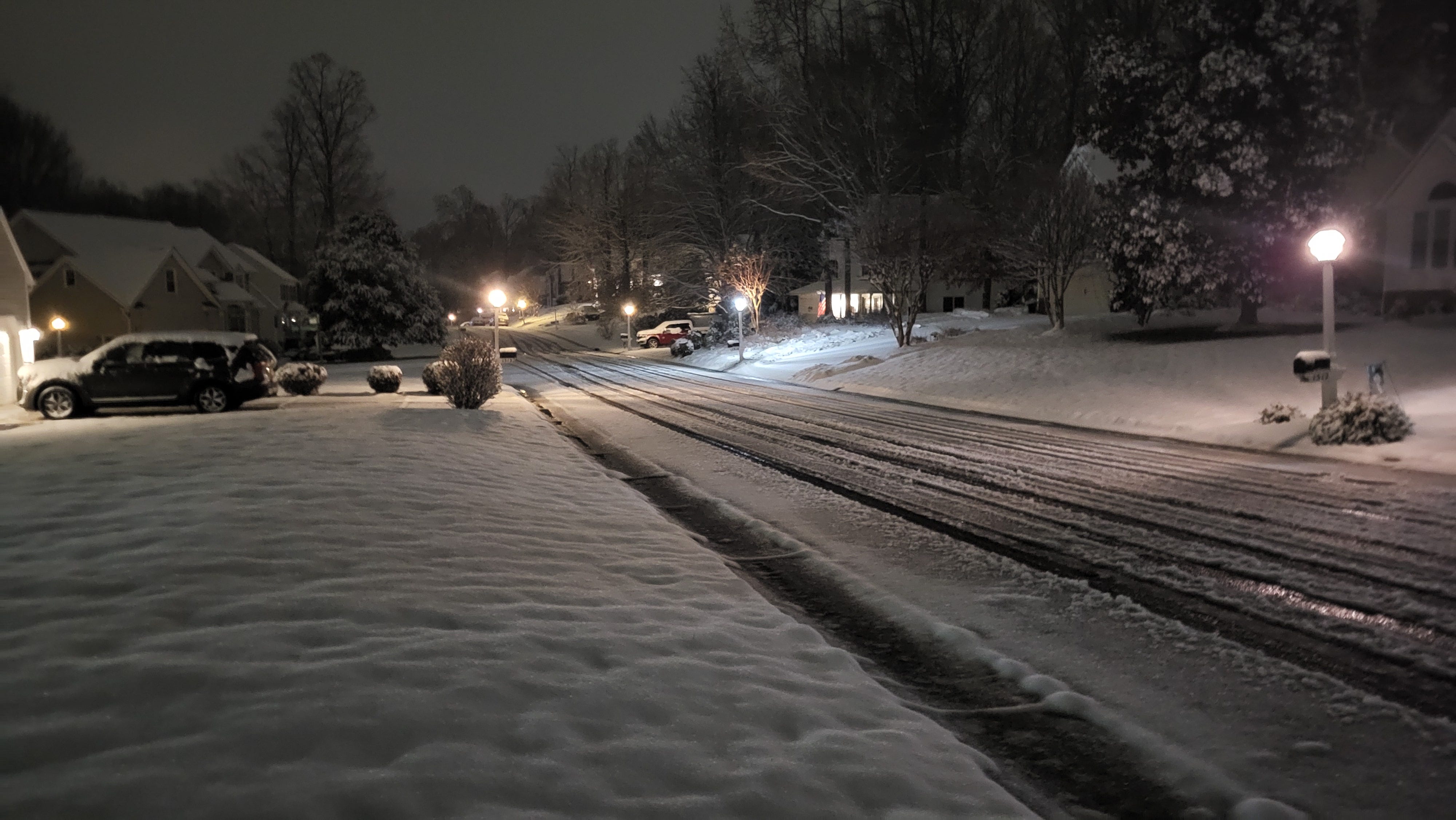
8:30am Friday, January 24, 2025
With the worst of the cold now behind us in RVA, a quick look back at some of the terms floating around in the last few weeks.
For years, winter storms in the United States took on colloquial names after the fact. Like Blizzard of ‘78, 1993 Storm of the Century, or Snowmaggedon.
In 2012, The Weather Channel decided — unilaterally — to give names to winter storms. While a name may make it easier to follow a storm's progress through time and space, both on the Weather Channel and its digital offerings, there was no coordinated effort to do this with anyone else who works in the business of communicating weather information.
More than a decade later, nothing has changed.
Going back a bit, hurricanes have been given names in the United States since the 1950s, but those names originated from the federal National Hurricane Center during a time before satellite pictures were available and radar images were scarce.
Since then, and knowing that hurricanes routinely cross national borders, the naming conventions are coordinated with the World Meteorological Organization — so people in Mexico, the United States, and the islands of the Caribbean are all aware of the same storm.
But The Weather Channel is, first and foremost, a business. They do not have their own radars, and they certainly do not launch their own satellites. Their business is fundamentally dependent on the data provided by NOAA, which is a branch of the U.S. Department of Commerce.
Unilaterally naming winter storms means there is no coordination of naming conventions between private and public entities when sharing high-impact weather information. With no coordination, there is an inconsistency in identifying storms across various media outlets, whether they are fully digital or legacy broadcast and cable.
And in the 2020s media environment, the constant firehose of information often leads to confusion and mistrust of solid, life-saving information.
When other media organizations use the names created by The Weather Channel, it often drives traffic back to The Weather Channel, increasing eyeballs to their broadcast product and clicks to their platforms.
Don’t get me wrong, I like The Weather Channel and have colleagues that work there. Their Immersive Mixed Reality productions are top-notch, informative, and educational.
But if you are wondering when “they began naming winter storms,” remember who they are. It is only The Weather Channel doing the naming here. Their convention carries no weight aside from their own branding.
Let the consumer beware.
Special thanks to Brandon Jarvis and his support from the Virginia Political Newsletter — so important during this year’s short session of the General Assembly

Speaking of branding and naming, now that the worst of the recent cold spell is behind us, we can revisit the true meaning of the dreaded polar vortex. Although that term gets tossed around rather loosely in headlines, it is an actual meteorological phenomenon.
Effectively, the polar vortex is an area of extremely cold air, deep through the atmosphere, encircling the area within several hundred miles of the north pole.
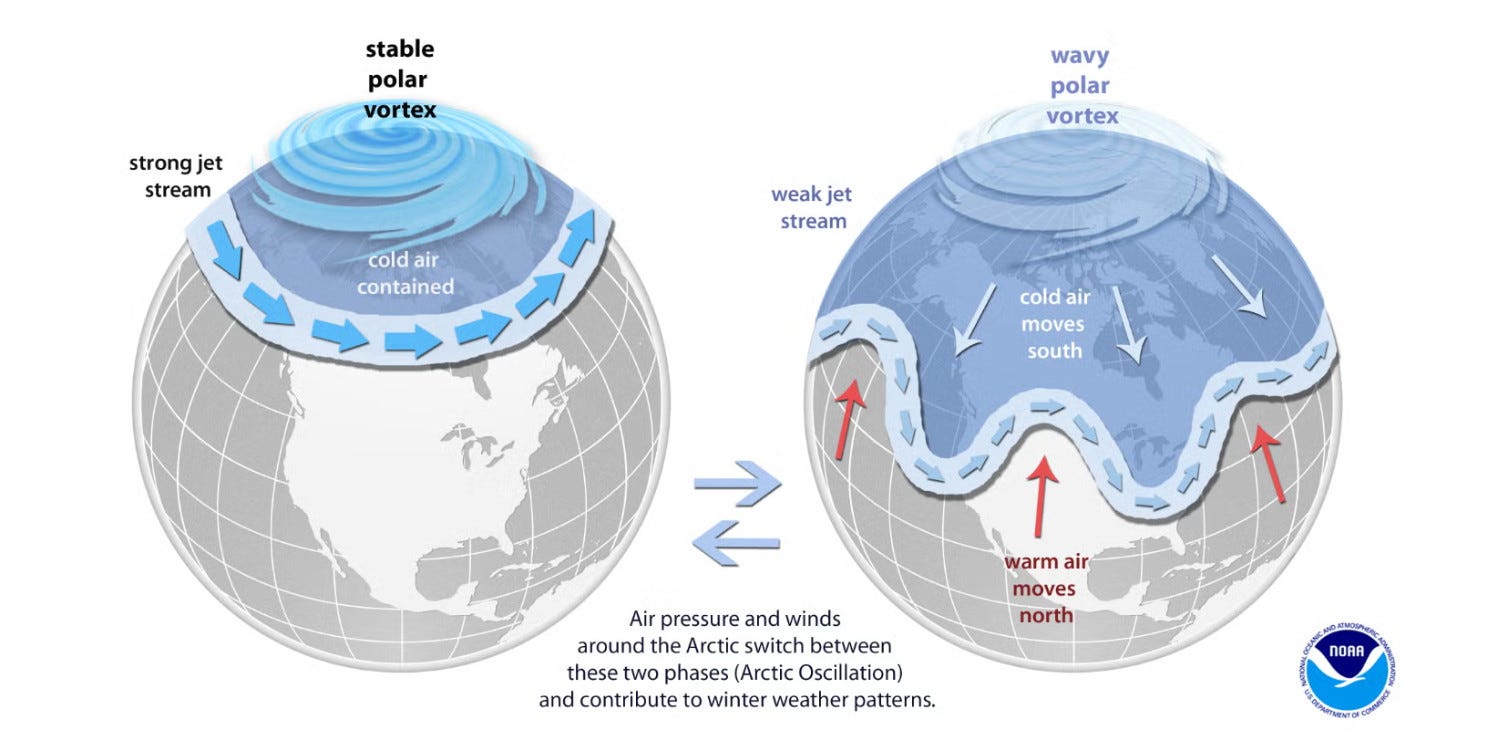
Wind around the polar vortex travels in waves, wobbling north and south away from the pole, and on occasion, one of those waves can swing unusually far south, or even break away, sending air from the pole much farther south than normal.
The air that rapidly moves along that boundary between the vortex and the area to the south makes up one branch of the jet stream. Another branch is farther south, marking the boundary between the more typical cold air we have in the winter and the warmer air even farther south — more often found in Florida this time of year.

Visit richmonder.org and wrir.org. In Richmond, for Richmond.
Polar vortex makes for a great weather headline, like invoking bomb cyclone or derecho, but there is nothing new or especially remarkable about any of these phenomena.
It’s like an elementary school kid who learned a questionable new word on the playground and won’t stop using it — much to the chagrin of his or her parents.
Have a good weekend!